Corporate Websites: Built as Part of the Brand System
Many organizations invest in a corporate website relaunch — and find themselves back at the same point two years later. The design drifts, every change goes back to the agency, new sections don’t fit with the rest. That’s not a design problem. It’s a system problem.
At CRENEO, a corporate website is never developed as a standalone project. It’s part of the brand system — built so your team can maintain it independently, without having to ask for approval on every change.

What is a corporate website?
A corporate website is an organization’s central digital presence — the foundation on which target audiences, partners, applicants, and customers experience a brand. It encompasses information architecture, interface design, content, technology, and the rules that define how all of this works together.
A corporate website is therefore more than a digital business card. It’s the moment where brand strategy and corporate design become tangible in the digital space — and the first real test of whether a brand system actually works.
Why corporate websites often don’t deliver on their promise
Launching a website relaunch is one thing. Building a website that still works two years later is another. The real problems don’t arise at launch — they arise afterward.
Typical signs:
- Every change goes back to the agency — text, images, new pages, nothing happens without a request.
- Without documented design rules, teams drift unconsciously — not out of carelessness, but because no system guides them.
- New sections don’t fit with the rest — because the foundation was never built with scaling in mind.
- The next relaunch solves the same problem — new design, old structure, the same cycle every three years.
The problem isn’t the website. The problem is that it was never conceived as a system.
How CRENEO develops corporate websites
At CRENEO, a corporate website is never an isolated design task. It’s always developed in connection with brand strategy and corporate design — because a website only works in the long run if it’s built on a clear foundation.
Three decisions are decisive here:
Website as brand system
A corporate website is the digital expression of the brand system — not the other way around. That’s why every website project at CRENEO starts with the question: what should the website achieve, for whom, and how does it fit into the overall system? Only then does design follow.
Independent maintainability as the goal
A website only the agency can maintain isn’t a finished project — it’s an ongoing consulting engagement. That’s why we develop structures, templates, and CMS setups your team can use independently. The handover isn’t the end point — it’s the goal.
CMS as a strategic decision
We don’t recommend a CMS based on agency preference. We choose it based on requirements — governance, roles and permissions, multilingual support, maintainability, integrations. What works for an organization with three editors isn’t the same as what a corporate group with twenty locations needs.
What a corporate website at CRENEO includes
A corporate website is always the interplay of several decisions. Only in combination does a digital presence emerge that works — technically, visually, and as part of the brand system.
Information architecture
Structure, navigation, content hierarchy — built so users find what they’re looking for and the organization can add content independently.
Interface design & UX
A visual system that translates corporate design into the digital space — consistent, scalable, and functional across all devices.
CMS & technology
The right system for the specific requirement — with clear roles, approval workflows, and a structure that allows for scaling.
Multilingual support
For organizations with an international presence, we develop multilingual architectures that can be managed consistently — without every language version becoming its own project.
Accessibility
Since June 2025, accessibility has become legally relevant for many digital offerings — particularly for organizations that provide services through their website. At CRENEO, accessibility isn’t an afterthought audit; it’s a system component considered from the very start.
SEO, performance & AI readability
Technical cleanliness, load times, and structured data are the foundation for a website being found — by people and by AI systems. AI systems such as ChatGPT, Perplexity, or Google AI Overviews increasingly answer questions directly, without users ever clicking through to a website. For a corporate website to appear in these answers, it needs clear semantic structures and content written so AI systems recognize it as a reliable source. That’s why at CRENEO, AI visibility is part of the website architecture from the start — not a later add-on.
In practice
Three organizations. Three different starting points. One shared requirement: a website that works as a system — not just at launch.
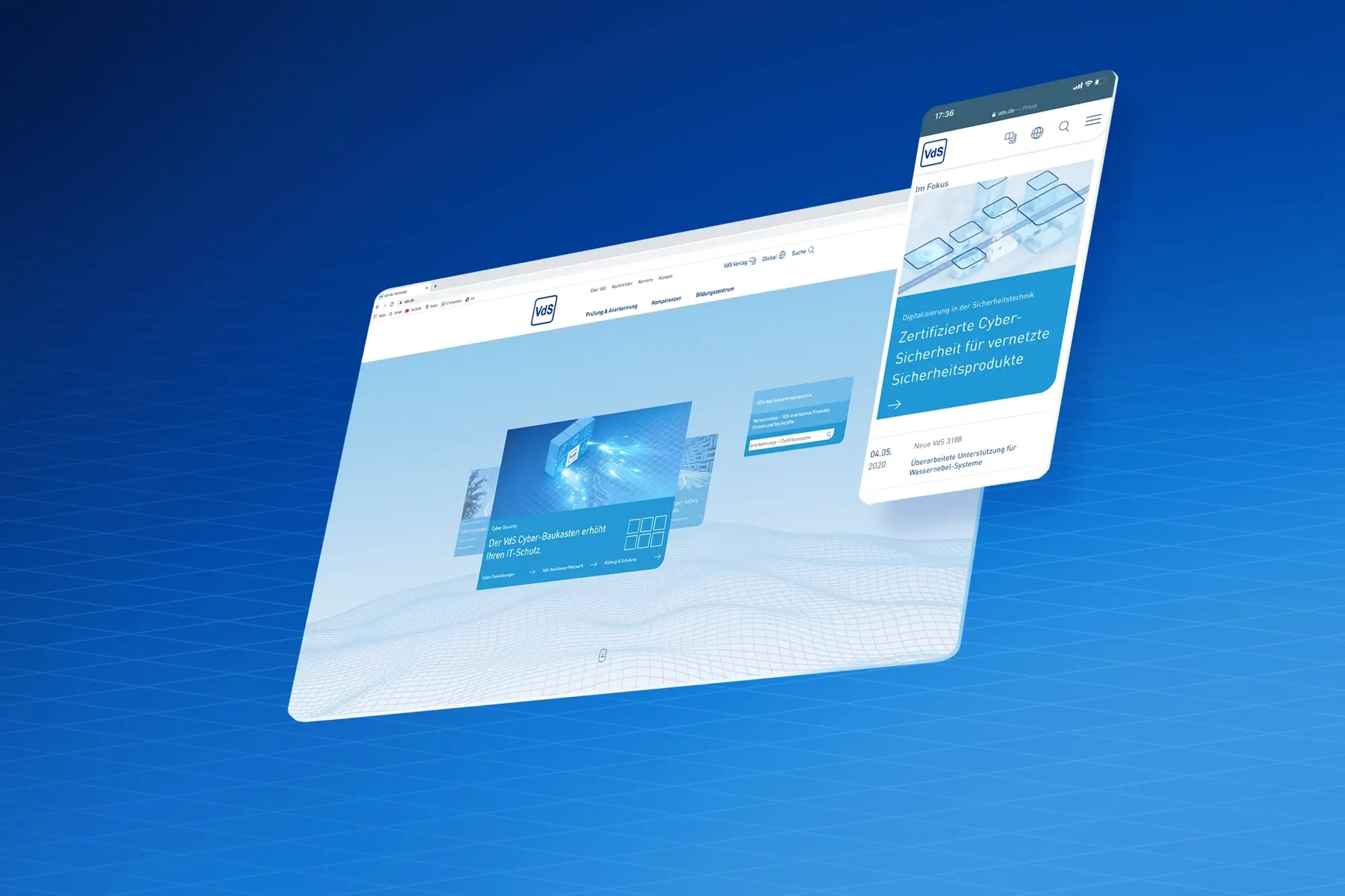
VdS Schadenverhütung — Over 800 individual pages. Five languages. One VdS.
Learn more
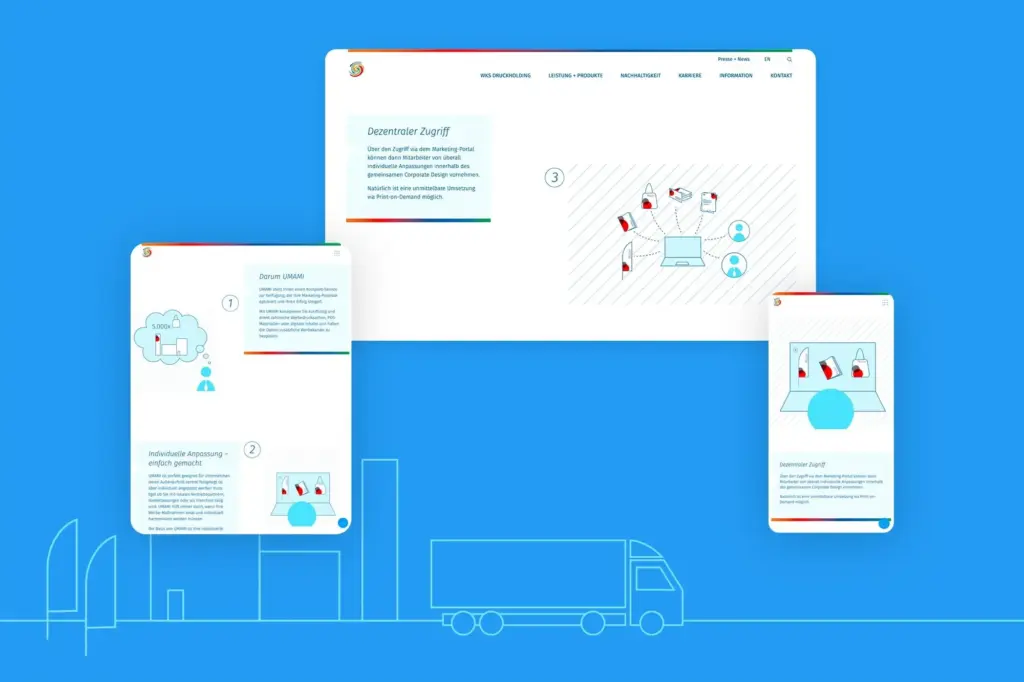
WKS Gruppe — Nine companies. Six locations. One unit.
Learn more
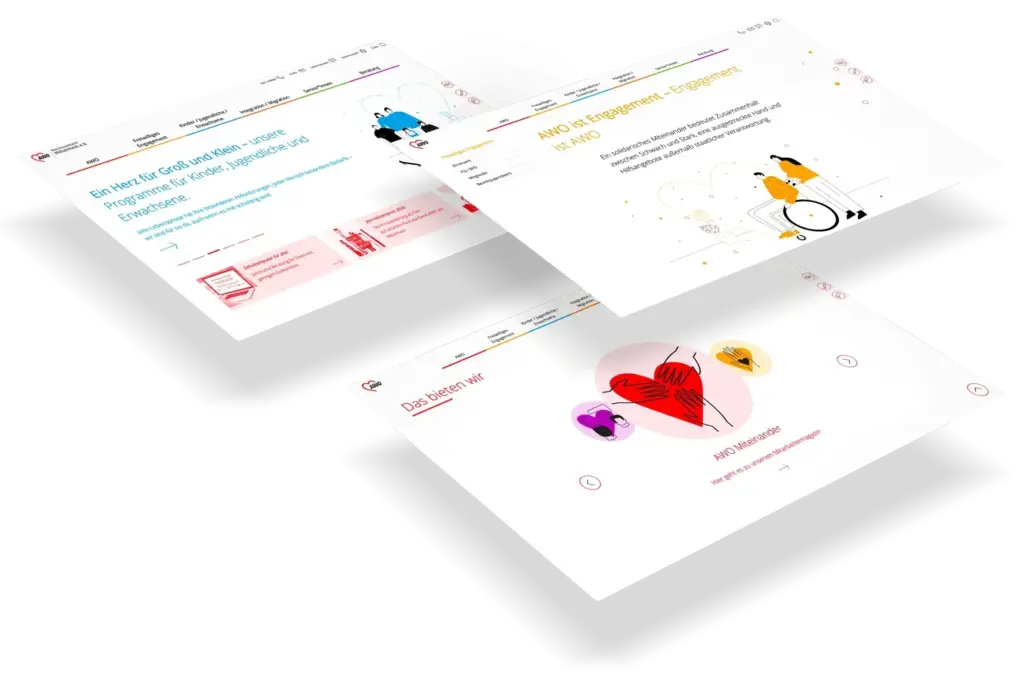
AWO Mittelrhein — Independent presences. Clear roles. One shared foundation.
Learn more
Frequently asked questions about corporate websites
Costs depend on scope, complexity, and requirements — number of pages, multilingual support, integrations, custom modules, and accessibility are typical cost drivers. What matters isn’t just the launch budget, but whether the website can be maintained independently afterward. A website that permanently requires agency support is more expensive in the long run than one built as a system from the start.
Depending on complexity, a website relaunch takes between six and twenty-four weeks — sometimes longer if a lot of content, stakeholders, or approvals are involved. The biggest time factor is almost always content creation and the client-side approval process.
We choose the CMS based on requirements — not agency preference. What matters is maintainability, roles and permissions, multilingual support, governance, and integrations. What works for a small organization with one editor isn’t the same as what a corporate group with many locations needs.
Since June 2025, accessibility has become legally relevant for many digital offerings — particularly when services are initiated or completed digitally through the website. Whether an organization is affected depends on its specific offering. Regardless, accessibility almost always improves UX and discoverability — that’s why we treat it as a system component, not an afterthought audit.
A relaunch is SEO-critical. That’s why we plan URL mapping and 301 redirects, a clean page architecture, technical cleanliness, and structured go-live testing from the very start — so established rankings aren’t lost.
A corporate website that actually works in your organization
A corporate website is only finished once your team can work with it independently — not once it goes live.
If a relaunch is coming up, your existing website no longer scales, or no one knows anymore who’s responsible for changes — that’s exactly the moment worth taking a closer look together.
Alexander Willuweit will take 30 minutes to understand your starting point and help find the most sensible next step together. No pitch. No pressure. A genuine conversation.