

Brand Architecture: Clear Structure for Many Units
Many organizations grow faster than their brand structure. New units join, companies get acquired, brands emerge in parallel — and at some point, nobody can say anymore how it all fits together. That’s exactly when brand architecture becomes the decisive question.
At CRENEO, we don’t develop brand architecture as an org chart, but as a strategic foundation — so that every unit is clearly positioned, can present itself independently, and still functions as one.

What is brand architecture?
Brand architecture describes the structural order of an organization’s brands. It defines how the parent brand, sub-brands, and individual brands relate to one another — which units present themselves independently, which communicate under a shared umbrella, and which rules apply.
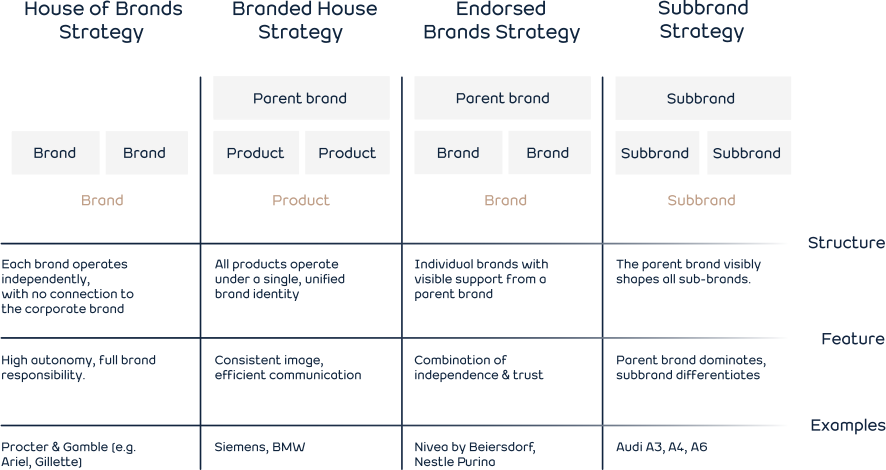
There are four basic models:
House of brands strategy
Each brand stands entirely on its own — with no visible connection to the organization’s other brands. This model is chosen when target audiences, markets, or positioning differ fundamentally.
Branded house strategy
All units appear under one shared brand. The parent brand provides orientation, and individual offerings or products are presented under it. This model is especially suited to organizations that prioritize consistency and efficiency.
Endorsed brands strategy
Individual brands present themselves independently but are backed by the parent brand. The connection is visible but not dominant. This model works well when individual brands already have a strong identity of their own.
Sub-brand strategy
The parent brand is clearly visible, and sub-brands benefit from its recognition while still having their own presence. This model works well when units address different target audiences but should still benefit from the strength of the parent brand.
When does brand architecture become a problem?
Brand architecture doesn’t always emerge from a deliberate decision. Often it simply grows — through new products, acquisitions, or organizational changes. The real problem arises when the structure no longer matches reality.
Typical signs:
- Units communicate independently of one another, without a shared framework.
- Customers don’t understand how brands and offerings relate to each other.
- After a merger or acquisition, brands compete internally instead of cooperating.
- New units don’t know under which umbrella they should appear.
- The corporate design works for one unit — but not for all of them.
This isn’t a communication problem. It’s a structural problem — and it can be solved once brand architecture is treated as a strategic decision, not a design one.
How CRENEO develops brand architecture
At CRENEO, brand architecture isn’t isolated strategy work. It’s the moment where strategy and design come together — because an architecture decision always has consequences for corporate design, rollout, and governance.
That’s why we develop brand architecture in three steps:
Analyzing the existing structure
First, we look together at what already exists: which brands exist, how they present themselves, where overlaps occur, and where clear rules are missing. This analysis doesn’t just reveal weaknesses — it also shows what strengths the existing structure already has.
Developing the architecture
Based on the analysis, we develop the right model — not as a theoretical construct, but as a decision-making foundation. We work out scenarios, evaluate them together, and make clear decisions about how each unit should be positioned.
Rollout and governance
A brand architecture isn’t finished until it lands in the organization. That’s why rollout, corporate design, and governance are a fixed part of every project — so the structure doesn’t just exist on paper, but works every day.
Examples from practice
A brand architecture decision is always a systems decision too. These cases show how different the starting points can be — and what holds true in every case in the end: the structure has to work in the organization every day.
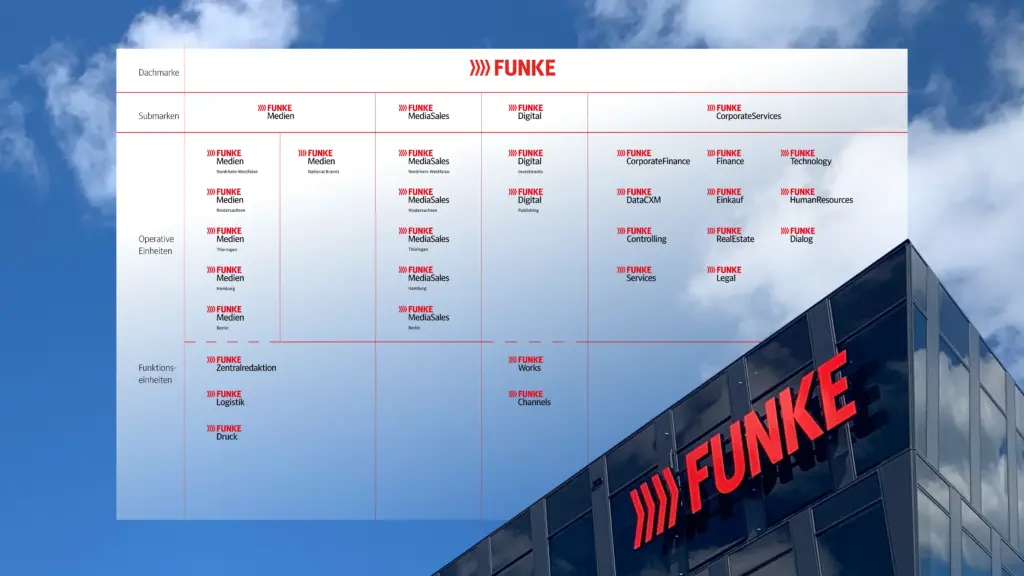
FUNKE Media Group — Brand architecture for over 30 sub-brands and more than 580 product brands.
Learn more
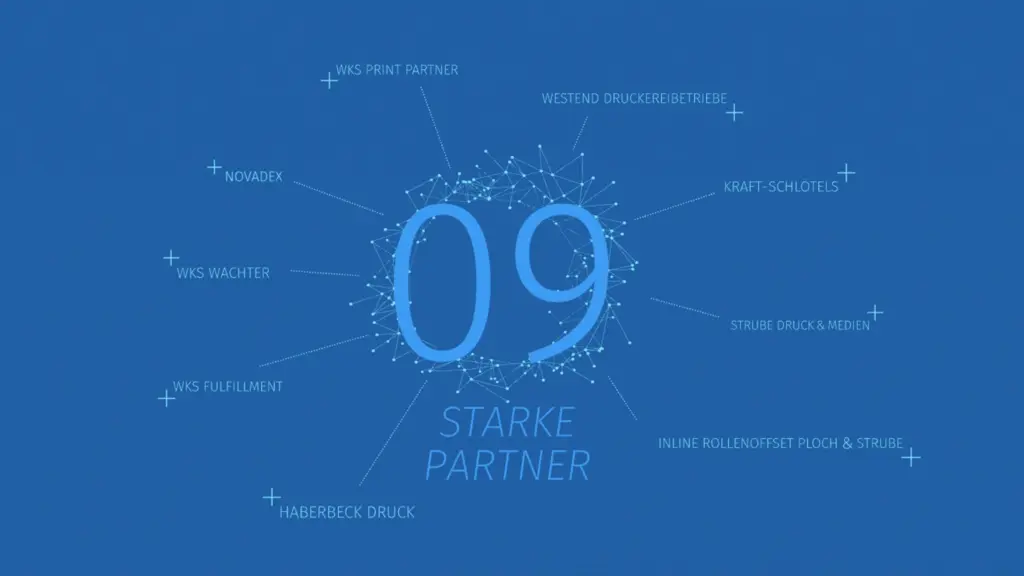
WKS Gruppe — Nine companies. One unit.
Learn more
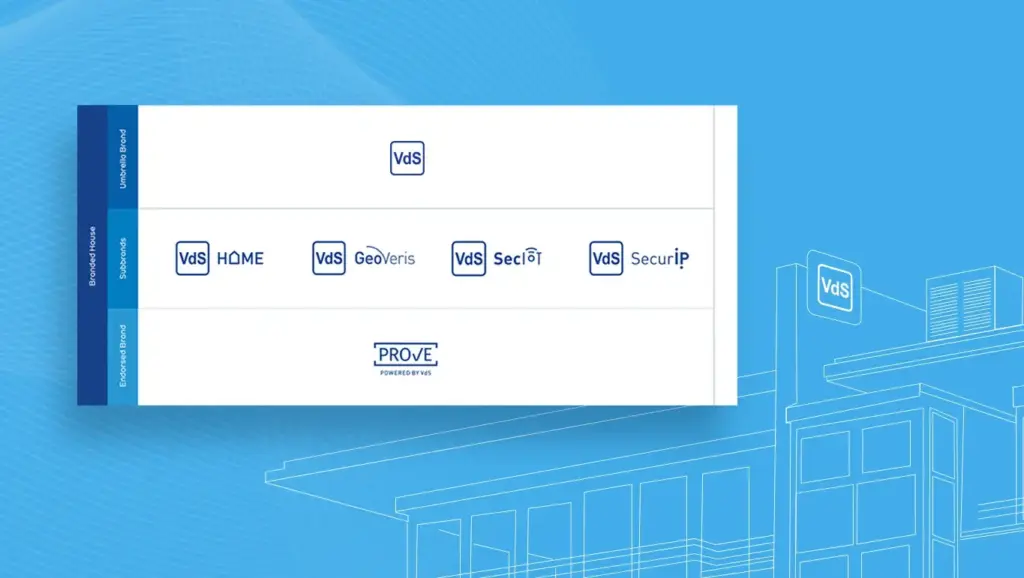
VdS Schadenverhütung — Endorsed brand for an international structure.
Learn more
Frequently asked questions
A new brand architecture makes sense when an organization has grown and the existing structure no longer matches reality — for example after a merger, an acquisition, a reorganization, or when new units emerge that no longer fit clearly into the existing structure.
Costs depend on complexity, starting point, and scope. What matters isn’t just developing the structure — it’s whether the result actually lands in the organization and works every day. If you’d like to know what a brand architecture process would mean for your specific situation, talk to us directly.
The duration depends heavily on the complexity of the existing structure. A fundamental brand architecture decision can be worked out within a few weeks. If rollout, corporate design, and governance follow afterward, that becomes a project spanning several months. A brand analysis is often a sensible first step to estimate the scope.
The two terms are often used interchangeably, but they aren’t the same. Brand structure describes the outcome — how brands are arranged. Brand architecture describes the strategic framework behind it — why they’re arranged that way and which rules apply.
Brand architecture that actually works in your organization
A brand architecture isn’t finished until every unit knows how to present itself — and can work with it independently, without having to ask for every decision.
If your organization is currently growing, has just gone through a merger or acquisition, or if nobody can say anymore how the brands relate to each other — that’s exactly the moment worth looking at together.
Alexander Willuweit takes 30 minutes to understand your starting point and find the most sensible next step together. No pitch. No pressure. A real conversation.