
Brand Voice: The verbal identity of your brand
Many organizations have a corporate design. But when three copywriters, two external agencies, and one AI tool describe the same brand, every text sounds different. That’s not a style problem. That’s a brand voice problem.
At CRENEO, it isn’t a standalone creative project — it’s a fixed part of the brand system. Because language and design together carry a brand’s identity, we always develop brand voice in connection with brand strategy and corporate design. The result is a verbal identity that doesn’t just sound good — but one your team can apply independently.

What is brand voice?
Brand voice describes a brand’s verbal identity — how it speaks, which words it chooses, what tone it strikes, and what rules apply. It covers tonality, vocabulary, sentence structure, phrasing principles, and the guardrails for every communication situation.
Therefore it is the verbal counterpart to corporate design. While corporate design defines how a brand looks, brand voice defines how it sounds — consistently across every channel, team, and communication material.
Why brand voice often doesn’t work
Defining it is one thing. Anchoring it in the organization for the long term is another. The real problems don’t arise in the workshop — they arise afterward, once many people communicate with the brand every day.
Typical signs:
- Different teams, locations, or external partners write in different tones.
- The brand personality is defined — but nobody knows how to translate it into copy.
- AI tools are used without guardrails — creating brand drift in written communication.
- New employees look to old texts instead of clear rules.
- Corporate design and brand voice were developed separately and don’t fit together.
This isn’t a creative problem. It’s a system problem — and it can be solved once the project is developed from the start as part of the brand system, not as an isolated style recommendation.
Brand voice as part of the brand system
At CRENEO, brand voice never emerges in isolation. It’s the verbal building block of a brand system — alongside corporate design, brand portal, and governance. That’s why we always develop it so it can flow directly into guidelines, the brand portal, and AI guardrails.
Three decisions are decisive here:
Tonality as a decision filter
Tonality isn’t “friendly and professional.” That fits any brand and helps with no decision. At CRENEO, we develop tonality so it functions as a decision filter: does this text sound like us — or not? When the answer is clear, the system works.
Rules instead of examples
Sample texts show how something can sound — but they don’t explain why. That’s why we develop clear rules: what’s typical for this brand, what’s off-limits, which vocabulary fits and which doesn’t. This lets your team develop new texts independently, without having to search for an example every time.
For AI applications
AI tools communicate in every direction without guardrails. That’s why, at CRENEO, operationalizing brand voice for AI tools is a fixed part of the process — as prompts, guardrails, and risk classes, so AI-assisted communication stays within the brand’s framework.
Overview
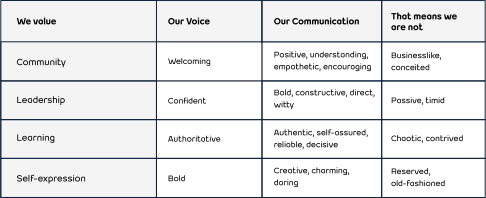
What brand voice at CRENEO includes
It’s always the interplay of several elements. Only in combination do they create a verbal identity that’s recognizable and can be reliably managed.
Tonality & brand voice character
The brand’s fundamental stance in communication — how it speaks, what character it has, and how it responds to different situations. The foundation for every further language decision.
Vocabulary & word choice
Which terms fit the brand — and which don’t. Including off-limits words, preferred phrasing, and brand-specific vocabulary that creates recognizability.
Phrasing principles
Sentence structure, length, composition — how texts are built and why. So external copywriters and AI tools work within the right framework too.
Corporate Voice Guidelines
The complete set of language rules in one documented system — accessible to everyone who communicates with the brand, integrated directly into the brand portal.
AI guardrails
Prompts, guardrails, and risk classes for AI-assisted communication — so brand voice stays consistent even when AI tools are in use.
In practice
Brand voice as part of the brand system becomes especially relevant when many people communicate with the brand every day — in corporate groups, complex organizations, or anywhere AI tools are used without a shared framework.

Wesselmann Werbung — Brand voice as a building block of a complete brand system.
Learn more
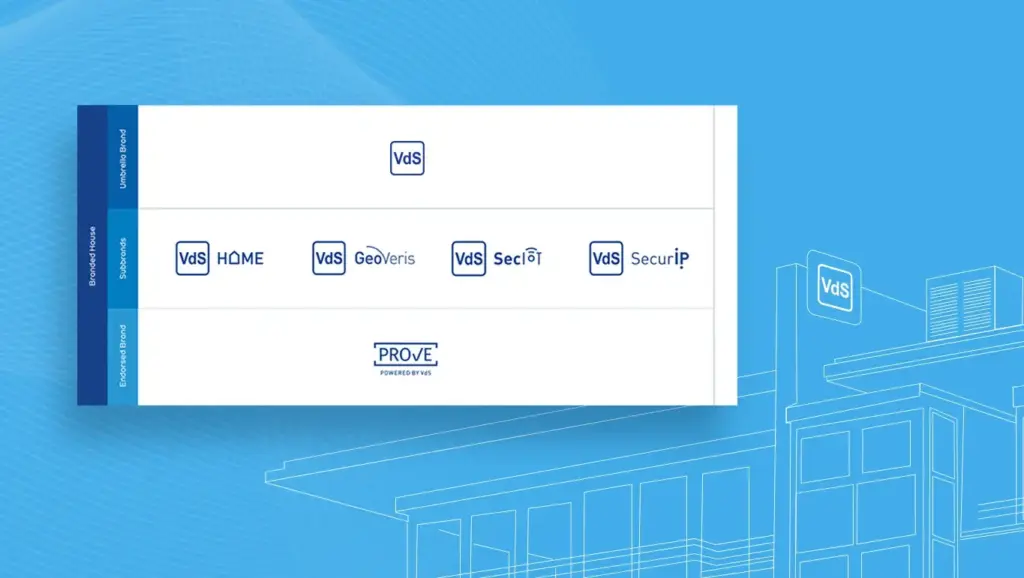
VdS Schadenverhütung — Corporate voice for an international organization.
Learn more
Frequently asked questions
it describes a brand’s verbal identity — how it speaks, which words it chooses, and what rules apply. It covers tonality, vocabulary, phrasing principles, and guardrails for every communication situation. A strong brand voice ensures a brand sounds consistent — no matter who’s communicating.
Brand voice is the broader term — it describes a brand’s entire verbal identity. Corporate voice is the documented, applicable form of that identity: the rules, principles, and guardrails that define how brand voice is put into practice. Brand voice describes the what — corporate voice describes the how.
A new voice makes sense when different teams or external partners communicate about the brand differently, when a corporate design relaunch is coming up and language and design should be developed together, when AI tools are used without a shared language framework, or when, after growth or reorganization, the old tone no longer fits the new positioning.
AI tools communicate freely without guardrails — they follow patterns, not brand values. To keep brand voice consistent even in AI use, clear prompts, guardrails, and risk classes are needed. That’s why, at CRENEO, operationalizing brand voice for AI applications is a fixed part of development — not an optional add-on, but a core part of the system.
Brand voice that actually works in your organization
Brand voice isn’t finished once the guidelines are handed over — it’s finished once your team can communicate with it independently.
If different units sound different, AI tools are used without guardrails, or language and design don’t fit together — that’s exactly the moment worth looking at together.
Alexander Willuweit takes 30 minutes to understand your starting point and find the most sensible next step together. No pitch. No pressure. A real conversation.