

Interface Design: When brands come to life digitally
Many organizations have a strong corporate design. But when it gets translated into interface design — website, app, portal, intranet — variations suddenly emerge that no longer fit the brand. Colors look different, typography behaves differently, spacing and proportions stop lining up.
This isn’t an implementation problem. It’s a systemic flaw — because the corporate design was never designed for digital surfaces in the first place. That’s why, at CRENEO, interface design isn’t a standalone design project. It’s the step that translates corporate design into a digital system — consistent, scalable, and part of the brand system.

What is interface design?
Interface design describes the design of digital user interfaces — how a website, app, or digital application is visually structured and how users interact with it. It covers layout, typography, color, spacing, interactive elements, and the rules that define how it all works together.
It differs from general web design in that it thinks systematically — not page by page, but as a coherent visual system that can be applied across all of a brand’s digital touchpoints.
Why interface design often doesn’t work
Designing a digital surface is one thing. Making it work consistently across every page, state, and device is another. The real problems don’t arise at the first launch — they arise afterward.
Typical signs:
- Every new page or section gets redesigned from scratch instead of building on an existing system.
- Digital surfaces and corporate design no longer fit together — because they were developed separately.
- Developers and designers interpret design rules differently because no clear components are defined.
- After a year, the website looks different across different sections.
- New digital touchpoints — apps, brand portals, intranets — get redesigned from zero instead of being derived from the existing system.
This isn’t a creative problem. It’s a system problem — and it can be solved once interface design is developed as a digital brand system from the start.
How CRENEO develops interface design
At CRENEO, it never emerges in isolation. It’s always the digital translation of corporate design — that’s why we always develop it in connection with brand strategy and visual identity. What works in print has to work digitally too — and vice versa.
Three decisions are decisive here:
System instead of pages
We don’t design individual pages — we design a digital design system: components, patterns, and rules that can be applied across every area of a digital application. This saves time, ensures consistency, and makes future expansion easier.
Corporate design as the starting point
Interface design doesn’t start with a blank document. It starts with the corporate design — colors, typography, imagery, formal language — and consistently translates it into digital elements. The result is a brand that feels like one piece, in print and digitally.
Handover to development and teams
An interface design that only exists in design files isn’t a finished system. That’s why a clean handover to development, documented components, and clear rules for application are a fixed part of every project.
What interface design at CRENEO includes
Interface design is always the interplay of several decisions. Only in combination do they create a digital system that works — creatively, technically, and as part of the brand system.
Visual design system
Colors, typography, spacing, grid, icons — defined and documented as a digital system. The foundation for every further interface decision.
Components & patterns
Buttons, forms, navigation, cards, tables — built as reusable components that can be applied consistently across every area of an application.
Responsive design
Every surface works on every device — not as an afterthought, but as a systemic decision from the very start.
Interaction principles
How elements behave — hover states, transitions, animations — as consistent rules that strengthen the brand experience in digital contexts.
Accessibility
Contrast ratios, font sizes, keyboard navigation, screen reader compatibility — designed in as part of the system, not audited in afterward.
Handover & documentation
Design files, component documentation, and developer handoff — prepared so development and teams can work with it independently.
In practice
Interface design as part of the brand system becomes especially relevant when digital surfaces are complex — many pages, many states, many teams working with it every day.
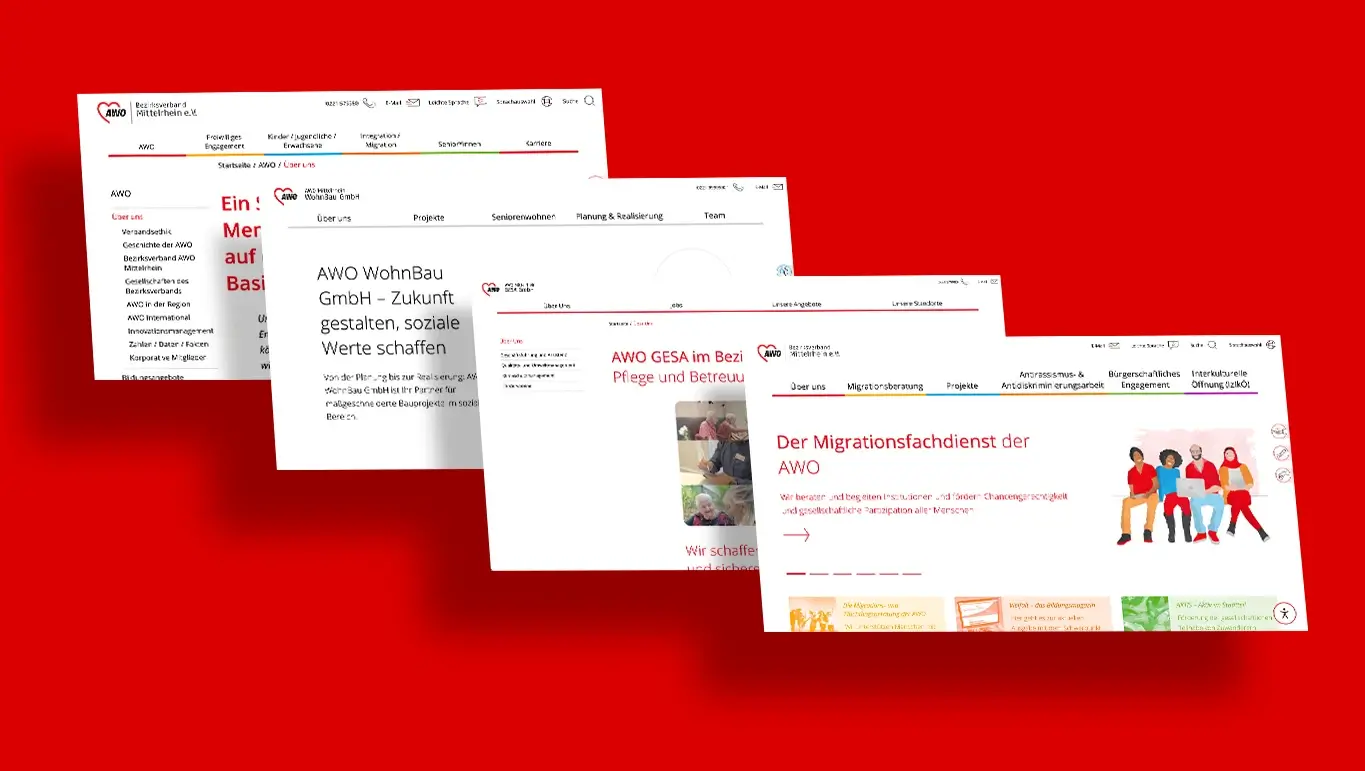
AWO Mittelrhein — Interface design for a shared CMS system.
Learn more
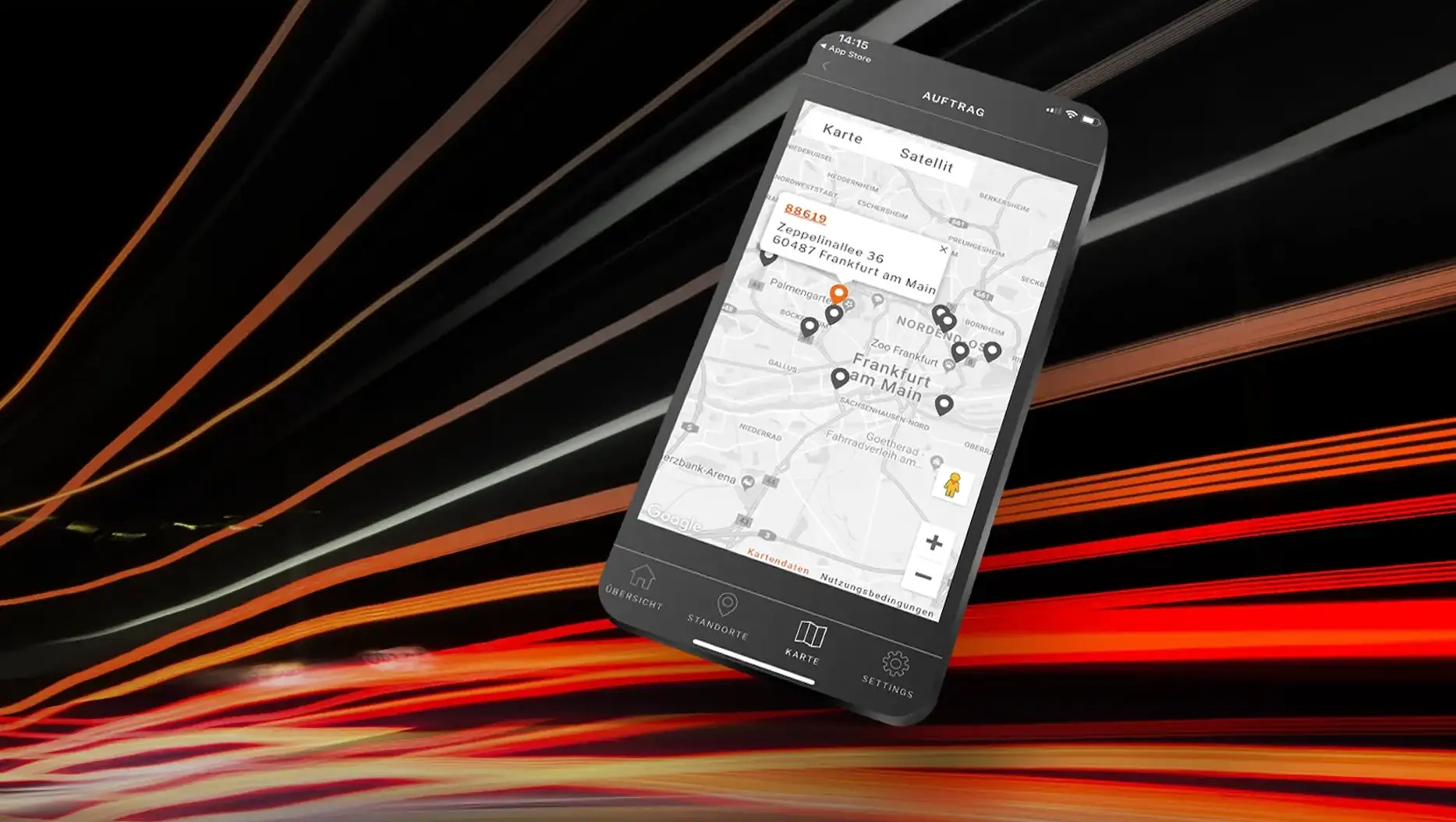
Wesselmann Werbung — Interface design for website and manager app.
Learn more
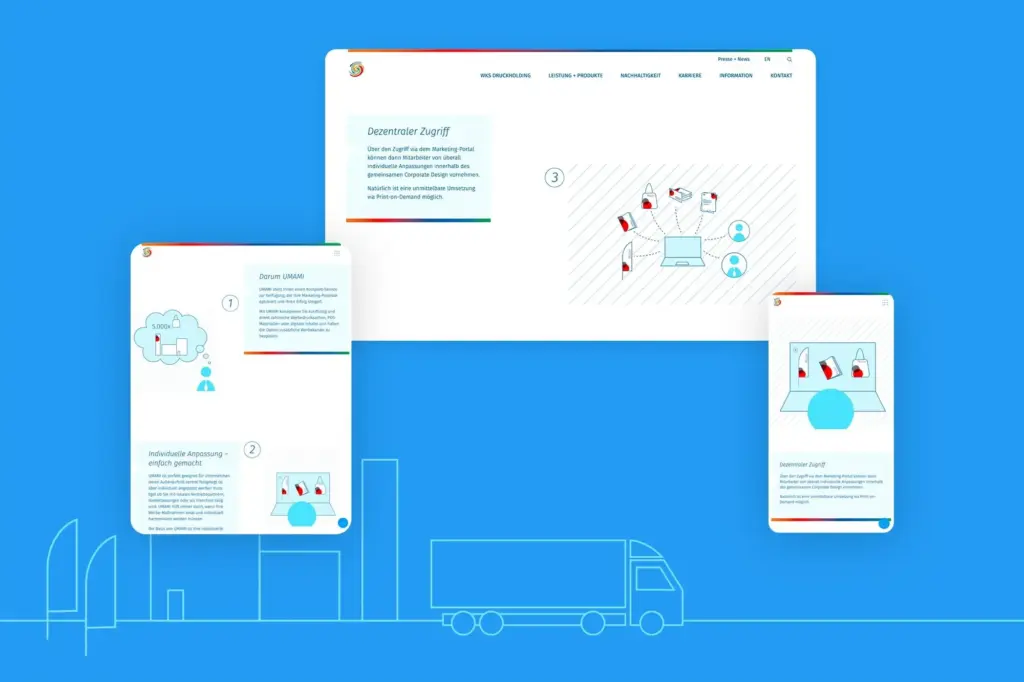
WKS Gruppe — Interface design for nine companies under one roof.
Mehr erfahren
Frequently asked questions about interface design
Interfacedesign beschreibt die Gestaltung digitaler Benutzeroberflächen — also wie eine Website, App oder digitale Anwendung visuell aufgebaut ist und wie Nutzer damit interagieren. Bei CRENEO ist Interfacedesign immer die digitale Übersetzung des Corporate Designs — als systematisches visuelles System, nicht als Einzelseitengestaltung.
Web design often describes the design of individual web pages — visually and content-wise. Interface design thinks more systematically: it develops a digital design system of components, patterns, and rules that can be applied across every area of a digital application. The difference is between a designed page and a system that scales.
UX design describes the user experience — how a digital application is structured, what paths users take, and how content is organized. Interface design describes the visual execution of that structure — how it looks, which components are used, and how the corporate design becomes tangible digitally. Both are closely connected and, at CRENEO, always developed together.
Interface design makes sense when a new digital application is being developed, when an existing website or app no longer feels consistent, when corporate design and digital surfaces are drifting apart, or when multiple digital touchpoints need to be brought onto a shared visual foundation.
Interface design that actually works in your organization
Interface design isn’t finished once the design files are handed over — it’s finished once development and teams can work with it independently.
If digital surfaces no longer fit the brand, every new page has to be redesigned from scratch, or corporate design and website are drifting apart — that’s exactly the moment worth looking at together.
Alexander Willuweit takes 30 minutes to understand your starting point and find the most sensible next step together. No pitch. No pressure. A real conversation.