
Brand Governance: When the brand grows, but nobody’s leading it
Many organizations have a brand strategy. Some also have a corporate design. But when three teams apply the brand in three different ways — and nobody knows who has the final say — that’s when the third piece is missing: governance.
Brand governance is the rulebook that determines who’s allowed to do what with the brand, how decisions are made, and who’s responsible. Not as bureaucracy — but so the brand still works even when the agency is no longer in the room.

What brand governance means — and what it doesn’t
Brand governance isn’t a control system. It’s a decision-making architecture.
It defines which people or roles approve brand materials, which content is centrally managed, and which units are allowed to act independently. It creates clarity about what’s possible with the brand — and what isn’t. Not as a restriction, but as the foundation for working faster and with more confidence.
The opposite of governance isn’t freedom. It’s drift: every unit develops its own version of the brand, decisions get postponed, consistency gets lost — not out of bad intent, but because the rules are missing.
When brand governance becomes decisive
Governance is especially relevant when:
- many people work with the brand every day — internally, externally, across different units or locations
- the organization has grown — through new teams, acquisitions, or new leadership
- a relaunch has taken place and the new brand now needs to land reliably in everyday work
- decentralized units communicate independently but should still follow a shared framework
- AI-assisted communication is in use — without guardrails, this leads directly to brand drift
In all these situations, governance decides whether the brand system still works after six months — or whether it has dissolved into variations.
How CRENEO builds brand governance
At CRENEO, governance isn’t a separate project — it’s the final step in every brand system. Because a system that can’t be managed isn’t a system.
In practice, that means: we define together which roles exist, who grants approvals, how exceptions are handled, and where the rulebook can be accessed centrally. The result isn’t a handbook gathering dust on a shelf — it’s a governance logic built directly into the brand portal.
Depending on the starting point, this includes:
Role model
Who’s allowed to do what, to what extent, with which approval. Clear responsibilities instead of implied ones.
Decision logic
Clear rules for standard cases, exceptions, and new situations — so not every deviation triggers a new discussion.
Approval processes
Integrated into the brand portal, without manual coordination loops.
Approvals move faster because the framework is already in place.
Version control
All units always work from the same version. No parallel versions, no outdated assets in circulation.
Handover & training
The system is meant to be carried without us — that’s why enabling internal teams is a fixed part of every project.
In practice
FUNKE Media Group — Governance for 6,000 employees
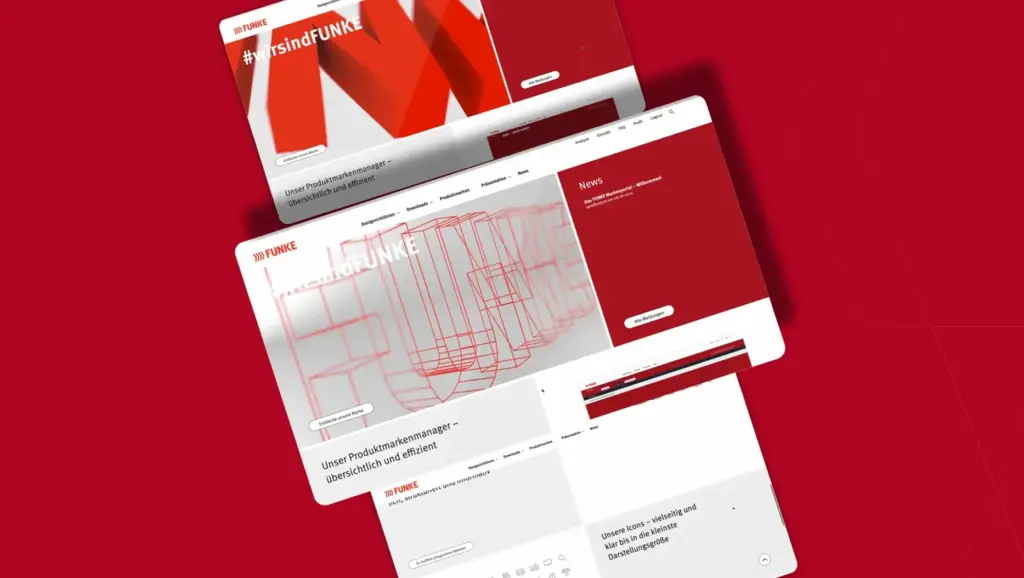
30+ sub-brands, over 550 product brands, decentralized units with different communication needs. Without governance, the new corporate design would have been just another document that everyone interpreted their own way.
CRENEO worked with FUNKE to develop a brand architecture with clear rules: who appears under which umbrella, which units are allowed to act independently, and which decisions are made centrally. The brand portal isn’t just the tool here — it’s the place where governance lives every day. View the FUNKE Media Group case
AWO Mittelrhein — Governance across institutions
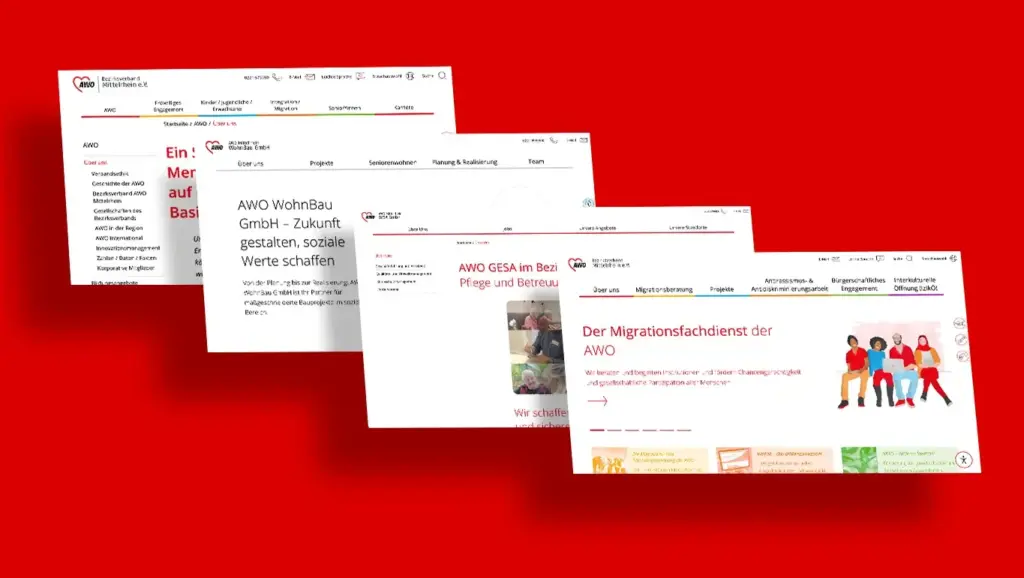
Many independent institutions, one shared brand. The challenge: preserving the independence of each AWO Mittelrhein organization while still ensuring a unified presence.
CRENEO solved this with a website system on a shared CMS platform — with clear rules for what each institution can design itself and what follows the shared framework. The result: four websites, one system, independently maintainable by each institution. View the AWO Mittelrhein case
Governance is what carries a brand system
Strategy and design decide what a brand is. Governance decides whether it’s still that in a year.
If you’re currently facing a relaunch, rolling a brand out across multiple units, or thinking seriously about structured brand management for the first time — that’s exactly the point where governance makes the difference.
Alexander Willuweit takes 30 minutes to understand the current situation — and to find the most meaningful starting point together. No pitch. No pressure. Just an honest conversation.