
Brand Analysis: How manageable is your brand?
A brand analysis doesn’t just show how a brand comes across — it shows whether it can actually be managed. That’s the difference. That’s why, at CRENEO, we don’t just assess brands on positioning, perception, and competition. We also look at whether strategy, design, voice, rules, and applications add up to a system that teams can work with confidently. Because a brand only becomes strong once it doesn’t just look good or sound good — but becomes manageable.

What is a brand analysis?
A brand analysis is a structured assessment of a brand’s current state. It examines what a brand stands for, how it’s perceived, how it differs from the competition, and whether its communication is consistent. Traditionally, this covers positioning, target audiences, competition, brand image, recognizability, and strategic potential.
For CRENEO, brand analysis goes a step further: we don’t just check what a brand promises, but whether it can deliver on that promise in everyday practice. In other words: are strategy, corporate design, voice, rules, templates, and applications connected in a way that creates a resilient brand system?
Why classic brand analyses often fall short
Many brand analyses primarily assess market position, target audiences, competitors, or image. That’s important — but it’s often not enough for complex organizations. Because the real brand problems rarely arise only in the market. They arise in the organization’s everyday work.
Typical signs:
- Teams interpret the brand differently.
- Design rules exist but aren’t used.
- Presentations, websites, social media, and campaigns drift apart.
- There are too many variations and too few binding decisions.
- New tools, AI, and external service providers create additional inconsistency.
- Approvals take a long time because guidance and clear rules are missing.
A good brand analysis therefore doesn’t just ask: how is the brand perceived? It also asks: how confidently can the brand be managed, applied, and developed further?
What CRENEO examines in a brand analysis
We view a brand as a system. That’s why we don’t just examine individual expressions, but the interplay between strategy, design, voice, rules, building blocks, and application.
Strategic clarity
Is it clear what the brand stands for, who it’s relevant to, and what role it plays in the market, within a group, or within an organization?
Recognizability
Are logo, colors, typography, imagery, layout, tone, and digital design distinctive enough for the brand to remain recognizable across many applications?
System capability
Are there rules, building blocks, templates, and examples that aren’t just documented, but can actually be used by teams?
Applicability
Does the brand work across real touchpoints: website, presentations, social media, campaigns, brand portal, documents, internal communication, and digital applications?
Governance
Is it clear who decides, who approves, who maintains, and how the brand is developed consistently over the long term?
Drift risk
Where has everyday application already moved away from strategy, corporate design, or brand voice? And which deviations are intentional, and which ones put recognizability at risk in the long run?
Brand analysis as a Brand System Check
The Brand System Check is the compact entry point for organizations that want to know how resilient their brand really is in everyday practice. We don’t just check whether a brand is formally well-defined. We check whether it functions as a system: understandable, consistent, applicable, and capable of further development.
We check:
- Where strategy, design, and application diverge.
- Which rules are missing or not being used.
- Where teams become uncertain.
- Which touchpoints are no longer consistent.
- Which templates, building blocks, or guidelines are missing.
- Which measures help in the short term.
- Which structural steps make sense in the long term.
The result isn’t an abstract analysis, but a prioritized roadmap: what needs to be sharpened, simplified, documented, or systematized so your brand can be confidently managed again?
Which methods can be part of a brand analysis?
Depending on the starting point, we use different analytical tools. What matters to us isn’t the model itself, but what insights it produces and whether they lead to clear decisions.
SWOT analysis
A SWOT analysis helps connect internal strengths and weaknesses with external opportunities and risks. It can be a good starting point for making areas for action visible.
Competitive analysis
The competitive analysis shows how a brand is positioned relative to relevant competitors — visually, verbally, strategically, and in terms of communication.
Target audience and stakeholder analysis
Especially for complex organizations, a simple target audience description is often not enough. What matters is which stakeholders work with the brand, evaluate it, approve it, or apply it in everyday practice.
Touchpoint analysis
The touchpoint analysis shows where a brand becomes visible — and whether it stays consistent across website, presentations, social media, campaigns, documents, and internal applications.
Brand drift analysis
In the brand drift analysis, we check where the brand’s everyday application has already moved away from strategy, design, or voice. This is especially relevant when many teams, locations, or external partners work with the brand.
When does a brand analysis make sense?
A brand analysis is especially useful when a brand has grown but is no longer clearly managed. This moment often arises through growth, new structures, new teams, new digital requirements, or a planned relaunch.Taget audience analysis
Typical triggers:
- Your brand comes across inconsistently.
- A website relaunch or corporate design process is coming up.
- Multiple locations, teams, or units work with the brand.
- A corporate design exists, but there’s little confidence in applying it.
- Brand rules exist but are hard to use.
- Internal approvals take too long.
- AI, templates, or external service providers create new variations.
- After growth, a merger, or a reorganization, the brand needs new clarity.
What should result from a brand analysis
A brand analysis shouldn’t stop at a status assessment. What matters is what follows from it. In our view, a good brand analysis needs a clear outcome: an understandable assessment, concrete areas for action, and a roadmap showing how analysis turns back into direction.
Possible outcomes:
- sharpened positioning
- clear brand principles
- an evaluation of the existing corporate design
- recommendations for voice and tone
- prioritization of relevant touchpoints
- requirements for guidelines, templates, or a brand portal
- a roadmap for relaunch, rebranding, or systematization
This turns the brand analysis from a theoretical document into a working tool for the decisions ahead.
Examples from practice
Brand analysis becomes especially relevant when brands need to function within complex structures: in corporate groups, associations, social organizations, regulated industries, or growing B2B companies.
In such contexts, a nice-looking appearance isn’t enough. What matters is whether the brand can be reliably applied by many people.

FUNKE Media Group — Brand architecture, corporate identity, and brand portal.
Learn more
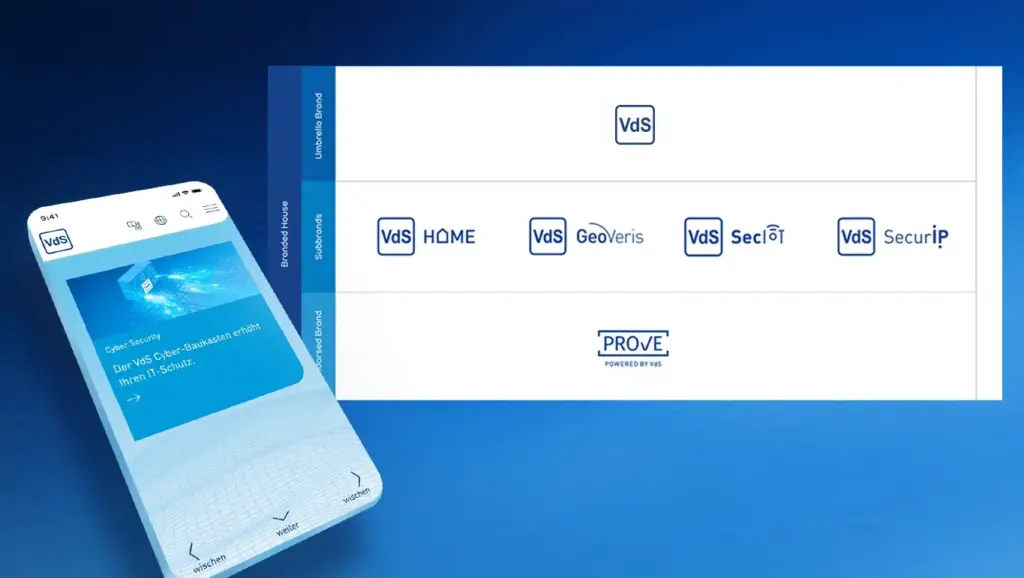
VdS Schadenverhütung — Corporate website / corporate design as a system.
Learn more
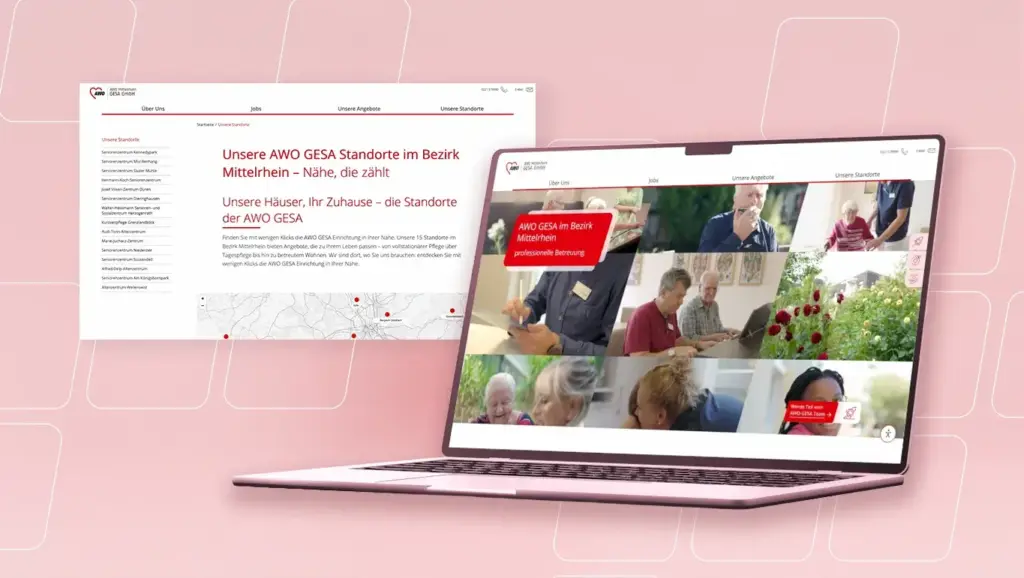
AWO Mittelrhein / AWO GESA — Website system for complex organizational structures.
Learn more
Frequently asked questions about brand analysis
A brand analysis examines how clear, recognizable, and effective a brand is. This includes positioning, competition, target audiences, perception, corporate design, brand voice, and applications. From CRENEO’s perspective, it also includes the question of whether the brand can be confidently managed in an organization’s everyday work.
A brand analysis makes sense when a brand comes across inconsistently, a relaunch is coming up, multiple teams work with the brand, a corporate design isn’t being applied consistently, or new clarity is needed after growth, a merger, or a reorganization.
A classic brand analysis primarily assesses positioning, competition, target audiences, perception, and communicative impact. The Brand System Check goes a step further: it examines whether strategy, design, voice, rules, building blocks, and applications together form a functioning brand system that teams can work with confidently.
Brand drift occurs when a brand’s everyday application gradually moves away from strategy, design, or tone. This often happens due to inconsistent templates, missing rules, unclear approvals, or too many individual interpretations.
The outcome shouldn’t be a mere status assessment, but a clear roadmap. It shows what needs to be sharpened, simplified, documented, or systematized so the brand can be confidently managed again.
You want to know whether your brand is still manageable?
For us, a brand analysis is never an end in itself. It’s the moment when it becomes visible whether a brand is merely described — or whether it can truly be managed.
When strategy, design, voice, and application no longer work together cleanly, brand drift emerges. A Brand System Check shows where this drift begins and what steps turn it into a resilient brand system.
Let’s talk — before unclear direction becomes a systemic problem
Let’s look at where your brand stands today — and what it needs to become clearer, more consistent, and easier to apply again.