

Brand Core: The content center of your brand
The brand core is what a brand truly is — not what it shows, but what carries it. It’s the content center from which all decisions arise: how the brand communicates, how it’s designed, how it presents itself, and how it can be managed. At CRENEO, we develop the brand core as part of the brand strategy — formulated so that teams can draw on it every day without having to re-discuss every decision.

What is a brand core?
A brand core is the condensed statement of what a brand fundamentally stands for — regardless of which products it currently offers, which campaign it’s running, or which corporate design it’s currently using. It comprises values, vision, promise, and personality as a coherent system.
For CRENEO, a brand core is more than a collection of inspiring words. It’s a decision filter: what fits the brand — and what doesn’t? When a brand core is formulated in a way that answers this question clearly, it works. When it only exists on paper, it’s worthless.
A brand core differs from brand positioning in that it works inward — it’s the foundation for all decisions, not the message to the outside world. And it differs from corporate design in that it’s content-based, not visual.
Why many brand cores don’t work in practice
Many organizations have defined brand values — in a workshop, in a strategy document, on the website. The real problem emerges afterward.
Typical signs:
- The values exist on paper, but nobody makes decisions based on them.
- Every unit interprets the brand core differently.
- New employees can’t explain what the brand stands for.
- Corporate design, website, and communication pull in different directions.
- AI tools, external partners, and new locations create additional inconsistency.
- The brand core isn’t used as guidance for strategic questions.
The problem is rarely that the values were wrong. The problem is that they weren’t formulated in a way others can actually work with. A brand core that doesn’t function as a decision-making foundation is a snapshot — not a system.
What CRENEO develops when building a brand core
We develop the brand core as a system of four content building blocks. Each one is formulated so it can flow directly into brand strategy, corporate design, brand voice, and brand portal.
Brand values
Brand values are the fundamental beliefs and principles a brand carries — not as an aspirational image, but as an honest description of what actually distinguishes the organization. Values that aren’t authentic won’t be applied in everyday work. Values that are too generic won’t help with any decision. CRENEO develops brand values so they function as a decision filter: specific, distinguishable, and applicable in everyday work.
Brand vision
The brand vision describes the brand’s long-term goal — where it wants to develop and what role it wants to play in the future. A strong vision inspires internally and provides direction externally. What matters is that it isn’t generic: a vision that could fit any organization gives no direction.
Brand promise
The brand promise is the brand’s central commitment to its target audiences — what benefit they can expect and what the brand reliably delivers. It differentiates the brand from the competition and builds the foundation for trust. A strong brand promise is clear, compelling, and deliverable in everyday work — not just formulated on the website.
Brand personality
Brand personality describes how the brand presents itself — which human traits it embodies, how it speaks, how it behaves. It’s the bridge between content strategy and visible brand voice. A clearly defined brand personality makes it easy to decide which tone, which imagery, and which form of communication fit the brand — and which don’t.
Brand core as a decision filter — not a document
The brand core doesn’t create value in the workshop — it creates value in the weeks, months, and years that follow. When teams make daily decisions about copy, design, offerings, and communication, they need a foundation. A brand core formulated as a decision filter answers this question directly: does this fit the brand — or not?
At CRENEO, we don’t hand over a slide deck. We hand over:
- formulated brand values that function as a decision-making foundation
- a brand vision that provides direction without being generic
- a brand promise that can be delivered in everyday work
- a brand personality that can be translated into language, design, and behavior
- training for the internal team, so the brand core doesn’t end up in a drawer
This turns the brand core into a system that works without us — as part of the brand strategy and as the foundation for corporate design, website, and brand portal.
Which methods are part of developing a brand core?
Depending on the starting point, we use different tools. What matters isn’t the model, but whether it leads to real decisions.
Brand workshop
The brand workshop brings the right people together — leadership, teams, sometimes clients or partners. Together, we work out the starting situation, strengths, values, and goals. A workshop alone, however, isn’t yet a brand core — what matters is what gets formulated, decided, and handed over afterward.
Competitive analysis
Before defining values, we look at what the competition already occupies — visually, verbally, and in terms of content. This way, brand values don’t emerge in a vacuum, but as a differentiating position within the real market environment.
Target audience and stakeholder analysis
Especially for complex organizations, an internal perspective alone isn’t enough. What matters is how the brand is perceived from the outside — by customers, partners, new employees, and other relevant stakeholders.
Brand core model
CRENEO uses a proven model for the structured development of the brand core — with vision, values, and impact at the center, and four strategic areas of impact: brand behavior, brand image, brand message, and brand offering. The model helps keep the brand core from remaining an abstract idea, instead understanding it as a system that works internally and externally.
Formulation and decision workshop
The brand core is formulated together — not by the agency alone. Only what the organization genuinely stands behind will work in the long term. That’s why the formulation process itself is part of the development.
When does it make sense to develop a brand core?
A brand core should be developed or sharpened whenever an organization has grown — but nobody can clearly say anymore what the brand stands for.
Typical triggers:
- The brand comes across differently across different areas.
- Strategic decisions are difficult because the content foundation is missing.
- A corporate design relaunch or website relaunch is coming up.
- New employees can’t explain what distinguishes the brand.
- Multiple units, locations, or external partners work with the brand.
- AI tools, campaigns, or external agencies create new variations without shared direction.
- After growth, a merger, or a repositioning, the brand needs a new content foundation.
What should result from developing a brand core
Developing a brand core shouldn’t end with a description. What matters is what follows from it. In our view, a good brand core needs a clear outcome: formulated so it’s understandable, directly applicable, and a foundation for everything that comes after.
Possible outcomes:
- formulated brand values as a decision filter
- a defined brand vision as strategic direction
- a clear brand promise that can be delivered in everyday work
- a described brand personality as the foundation for language and design
- requirements for corporate design, brand voice, and brand portal
- a roadmap for integration across all brand areas
This turns the brand core from a theoretical document into the content center from which all decisions arise.
In practice
Developing a brand core becomes especially relevant when brands need to function within complex structures — in corporate groups, social organizations, regulated industries, or growing B2B companies. In such contexts, a nice-looking appearance isn’t enough. What matters is whether the brand core can be reliably applied by many people.
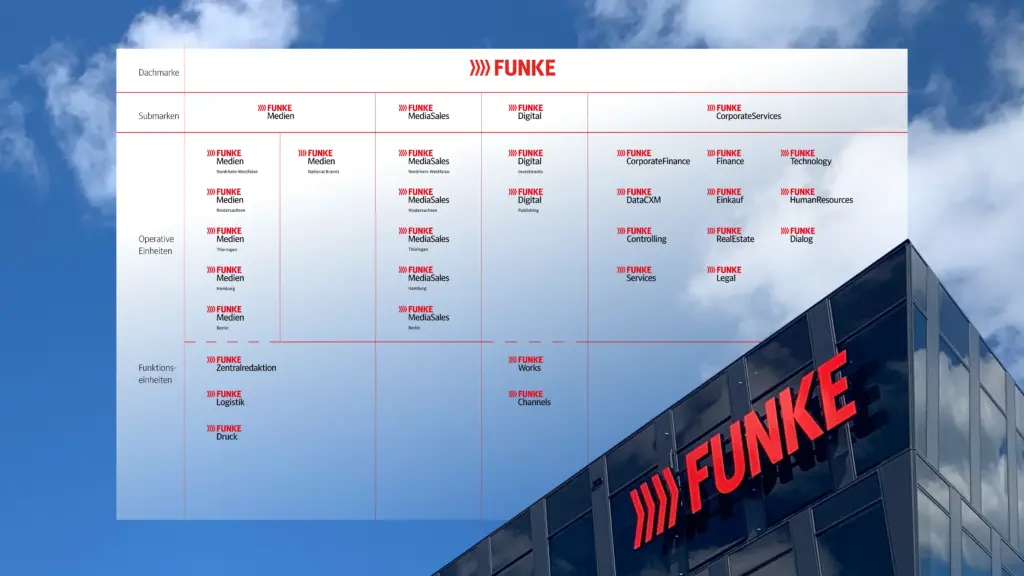
FUNKE Media Group — Brand values and brand identity for over 30 sub-brands and 6,000 employees.
Learn more

Wesselmann Werbung — Four value dimensions as the foundation for corporate design and website.
Learn more
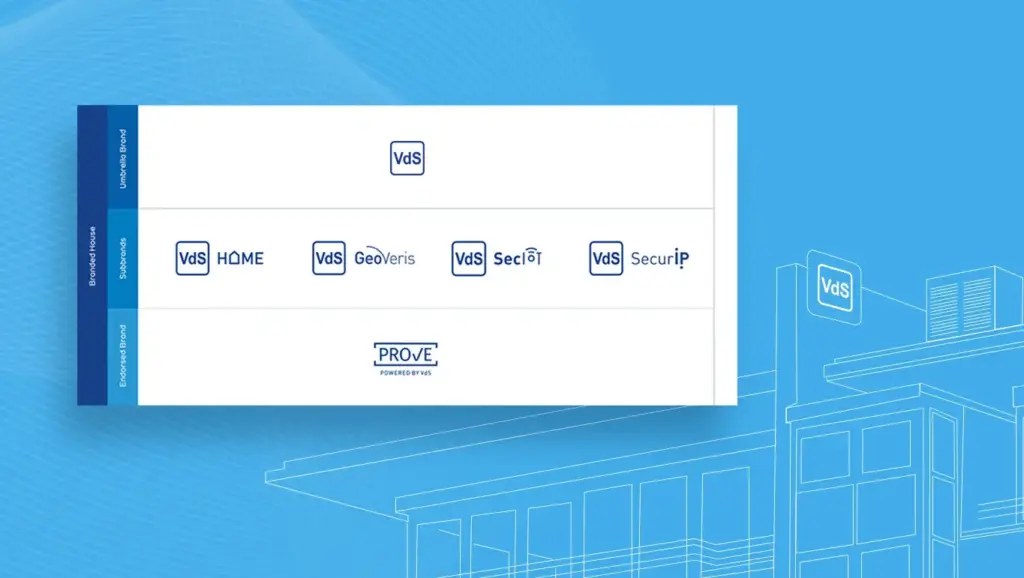
VdS Schadenverhütung — Brand core as the foundation for an international brand architecture.
Learn more
Frequently asked questions about the brand core
A brand core is the content center of a brand — the condensed statement of what it fundamentally stands for. It comprises brand values, brand vision, brand promise, and brand personality as a coherent system, and serves as the decision-making foundation for everyone who works with the brand every day.
The brand core describes what a brand is — its values, its personality, its promise. Brand positioning describes how it stands relative to the competition — what sets it apart and why target audiences should choose it. Both are part of the brand strategy, but they work on different levels.
The brand core is content-based — it defines what the brand is and what it stands for. Corporate design is visual — it translates the brand core into logo, colors, typography, and imagery. A corporate design without a strong brand core stays surface-level.
Depending on the starting point and complexity, developing a brand core typically takes 4 to 8 weeks — from analysis and the brand workshop through to the formulated handover. If the brand core is part of a complete brand strategy, the process can take 6 to 12 weeks.
If the values and vision are fundamentally still right but aren’t clearly formulated or applicable, sharpening is often enough. If the organization has changed fundamentally — through growth, a merger, a repositioning — developing a new brand core makes more sense. We clarify what’s right for you in the first conversation.
You want to define your brand’s core — so it actually gets used?
For us, a brand core isn’t the result of a single workshop. It’s the content center from which all decisions arise — internally, externally, today and in two years. When values, vision, and personality aren’t clearly formulated, every question becomes a discussion: what fits the brand? What doesn’t? A structured development process turns this into a decision filter that works without us.
Let’s talk — before unclear direction becomes a systemic problem
Many brands don’t lose their content clarity suddenly — they lose it gradually. Through growth, new teams, new demands. At some point, nobody can say anymore what the brand stands for, decisions become harder, and communication grows less consistent.
Let’s look together at where your brand core stands today — and what it needs to work again as a clear foundation for every decision.