
Editorial Design: Structure That Carries Content
Editorial design is the visual treatment of editorial content — from customer magazines to annual reports to brand manuals. Done well, it makes complex information readable without departing from the brand rules that already apply everywhere else.
What is editorial design?
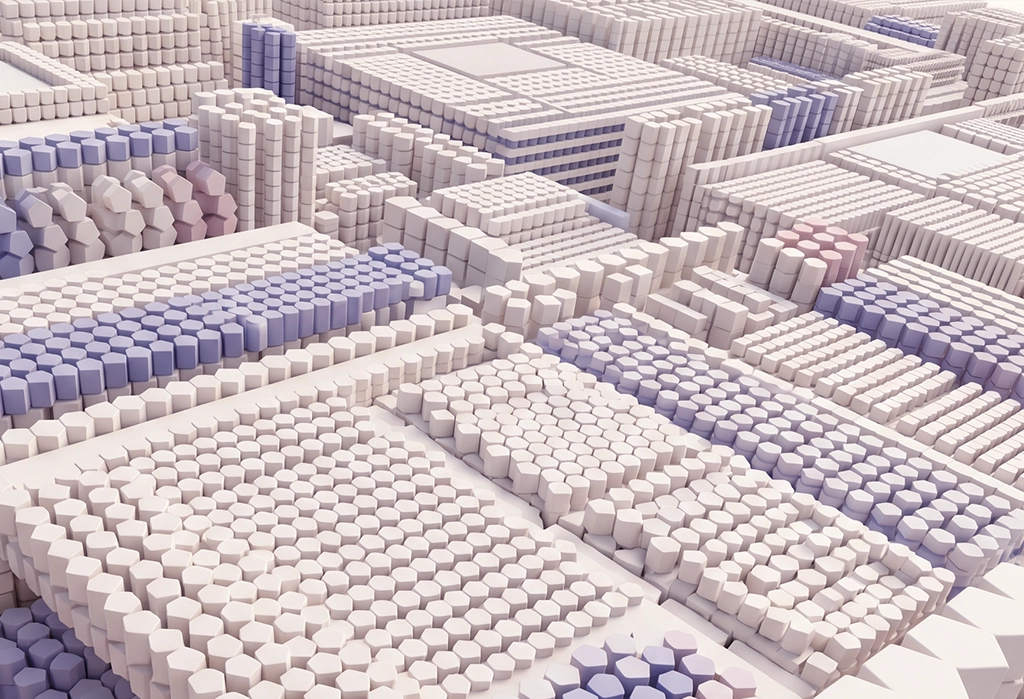
Editorial design refers to the graphic design of editorial print and digital formats — magazines, annual and sustainability reports, brand manuals, brochures. Corporate design sets the underlying rules. Building on that, editorial design translates these rules into long, editorially structured formats: grids, type hierarchies, the relationship between image and text.
Why many reports stay hard to navigate
Lots of content, little structure — and in the end, no one reads past the first few pages.
Typical signs:
- Long blocks of text with no visual guidance through the page.
- Inconsistent hierarchies between headings, figures, and body text.
- Corporate design rules that suddenly aren’t followed in the report.
What CRENEO works out
Grid and structure
A consistent column grid makes long documents readable without having to be reinvented on every page.
Typographic hierarchy
Clear distinctions between headings, subheadings, and body text — so readers can find their way even through an 80-page report.
Data and image integration
Graphics, tables, and photography are integrated into the same visual language as the text. As a result, they don’t look like foreign elements, but like part of the same system.
Alignment with the brand team
Before a report or magazine goes to print, we check every application against the existing brand rules — so a single format doesn’t become a special case that has to be reined in later.
When does editorial design make sense?
- An annual or sustainability report is coming up.
- A brand manual needs to be documented and distributed internally.
- A brochure or publication needs a redesign.
- A customer magazine needs a recurring but flexible layout.
- Existing materials look inconsistent or are hard to read.
What should come out of it
Editorial design shouldn’t end with a one-off, good-looking issue. What matters is whether the structure can be reused for the next issue or the next report.
Possible outcomes:
- a template the team can use to produce the next issue independently
- a grid system that carries over to future issues
- clear type hierarchies that are followed without having to ask
- a visual language that fits within the existing brand framework
In practice
Four formats, one shared requirement: structure that can be reused for the next issue or the next occasion.
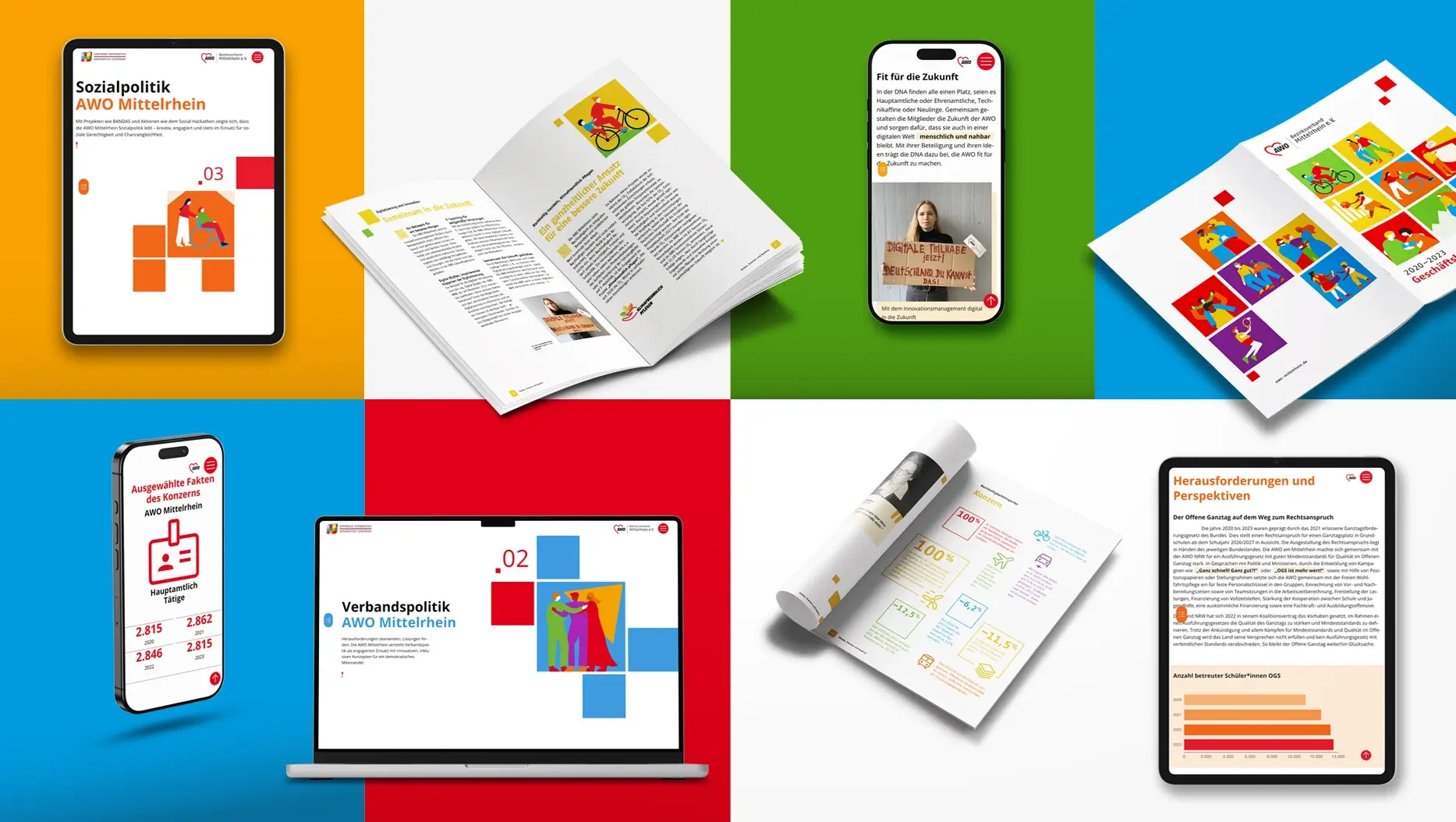
AWO — Annual report in print and digital, with a clear structure for complex figures.
Learn more
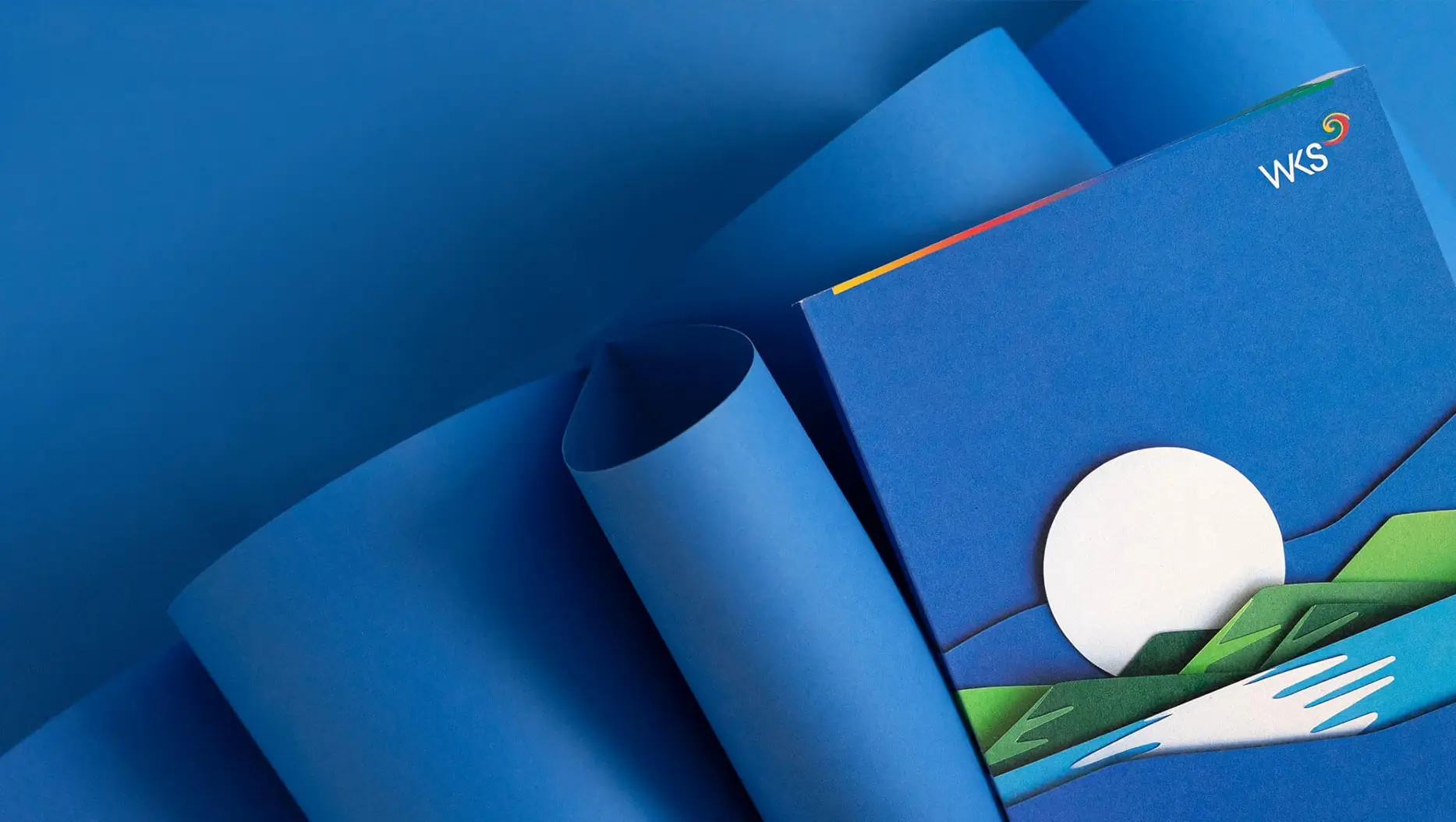
WKS Gruppe — An environmental statement, awarded for its clear editorial concept.
Learn more
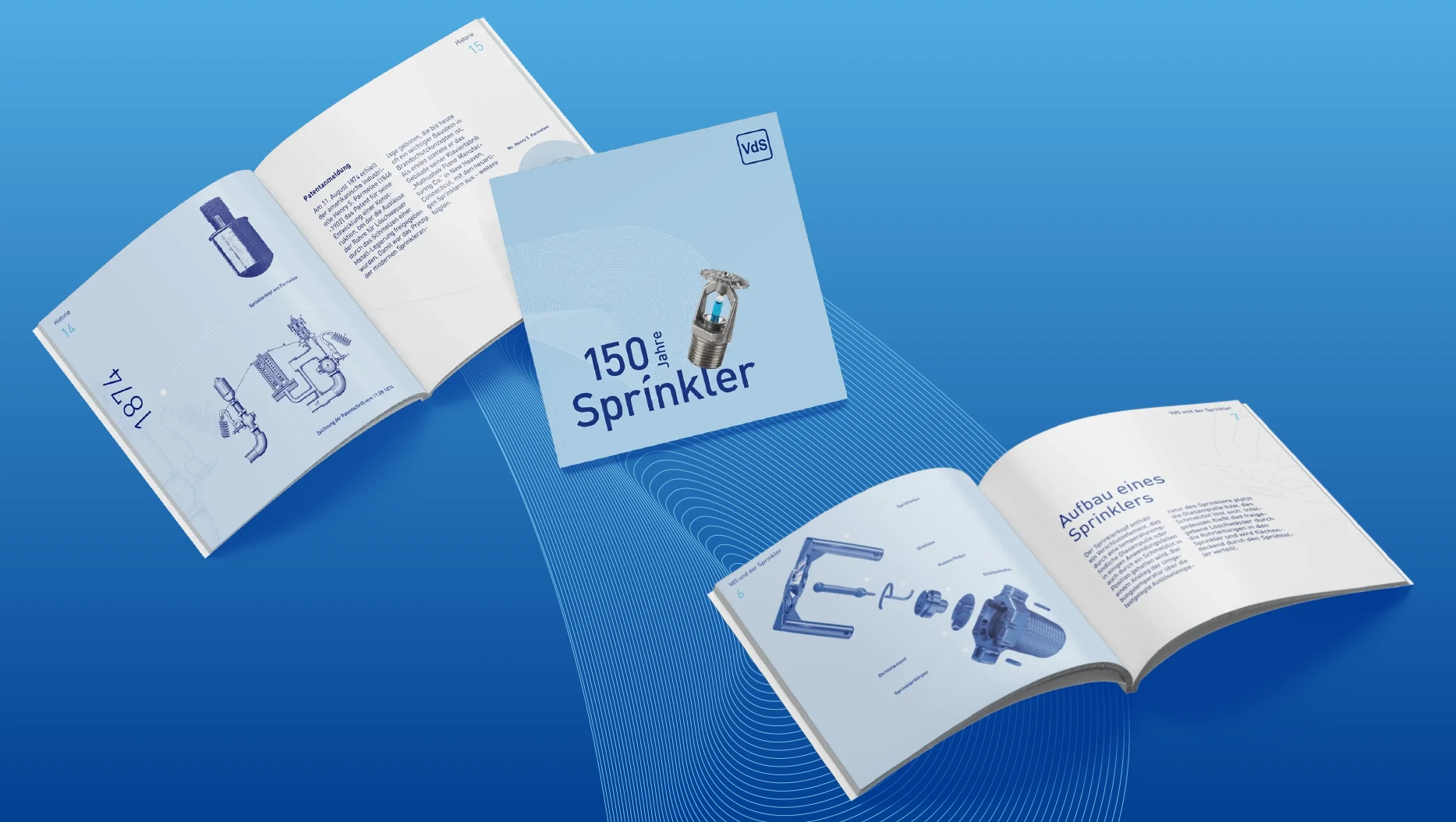
VdS Schadenverhütung — An anniversary brochure marking 150 years of sprinkler history, edited and designed for readability.
Learn more
Frequently asked questions
Corporate design sets the underlying brand rules. Editorial design applies these rules to long, editorial formats — such as reports or brochures.
Not necessarily. As a rule, an existing corporate design speeds up the process considerably, because the rules for color, type, and imagery are already in place. However, there are also formats that are deliberately meant to stand somewhat apart from the existing rules — such as a special publication or a format with its own visual language. In that case, we jointly define how far the editorial design may depart from the existing CD without diluting the brand as a whole.
Both. We design the grid so it can be carried over to a PDF, a web view, or an interactive format without having to be completely rethought.
Both are possible. Primarily, we handle the design — you provide the existing text and data, and we bring it into a clear, readable structure. On request, we can also write the copy ourselves, based on your existing brand language and tone, so that design and content come from a single source and fit together consistently.
Do you have a publication that needs to become more readable?
Let’s talk about how to structure your content clearly and in line with your brand — whether it’s a report, a magazine, or a brochure.